
Building stronger connections among kids – and with your own kids at home
Updated: Apr 25
You.Me.We.All interviews Andrea Hill: Parent & Community Engagement Coordinator at Communities For Youth (C4Y) – and Mom of 4
Q: Tell us about your role and the mission of Communities For Youth.
At its core, my job is about connection – helping community members understand the role they play in building places where kids can truly thrive.
A big part of what I do is educating people on upstream prevention: how the everyday things we do now protect youth mental health down the road. I also spend a lot of time cultivating relationships with individuals and organizations who share that vision.
The mission of Communities for Youth is to empower communities to support youth well-being — identifying both the challenges kids face and the protective factors that help them flourish. Things like: Do teens feel connected? Are they getting enough sleep? Do they have a trusted adult in their life? Those details matter more than most people realize.
Q: Tell me about the youth mental well-being survey – and about this year’s major findings.
We've been collecting data about youth mental health through our anonymous survey across the state from students in middle, junior high, and high school (ages 12 to 18) over the past four years. This survey allows us to look at trends over time and also see what factors are having the greatest impact on youth depressive symptoms.
And the top 3 factors impacting kids’ mental health from this year’s survey – with more than 4,000 kids – were:
1.) Lack of social connection
2.) Stress
3.) Poor sleep

And what's interesting is that all three of these can work strongly together.
For example, research supports that social connection and sleep are bi-directional – meaning that sleep and friendship grow together.
“A well-rested teen can regulate emotions better and show up more positively for friends. And having supportive friendships has been proven to lower stress – and help teens sleep better.”
Q: What can parents do at home to support kids in these 3 areas?
The first thing that parents can do is to work to create a solid relationship with your kid because your connection with your kid will have a ripple effect.
Psychologist Gordon Neufeld recommends that parents try to have quality connections where they can be fully present for their kids. This can be in small bursts of connection, like driving between school and home or from practice. But the focus of the connection is on the teen and what matters to them.
“Eye contact, shared laughter, and moments of warmth help teens feel valued. Carving out time to connect each day creates the space kids need to share what they’re truly thinking and feeling.”
And when that time is just about connection – and not harping on them – you’ll slowly get to know what stresses your kid out, what might be a relief for them and what’s important to them.
For example, if my teenage son is facing a big day, instead of nagging him to get to bed early, I might say: I know you’ve got a big day tomorrow. How can I help you get in bed tonight? What do we need to be doing?
And because I’ve created a relationship with him, my words don’t come across as me harping on him – he can see me as someone who's in his corner, not someone who's on his case.
“When parents aim for intentional ‘you-have-my-full-attention’ connection every day, it can help a lot of other things fall into place.”
Q: What might “you have my full attention” connection with your kid look like?
It's laying a foundation of you knowing what things are important to them. In our home, I play Wordle with my boys. We're on a group thread together, which allows us to kind of have some fun banter back and forth – and I can tease them about it later, and none of it is naggy.
Here are a few other examples of how I connect with my kids:
One of my boys loves Jimmy John's, and if I'm picking him up from practice, I might say, “Hey, you want to grab Jimmy John's?” And, of course, he’s all about it – and boom, we have a little bit more time in the car together to connect and he feels like I’m on his side.
The other day my son said, “Mom, a kid got pulled over on his e-bike – what do you think about that? He actually initiated the conversation. And that’s the thing … connection often happens best when it’s not your agenda, when you’re not asking, “How’d you do on the test?”
“When asking about a kid’s day, a question like,“What did you do at lunch?” may help them open up more than question that's tied to their performance.”
Q: What can parents be doing on a community level to help kids be less stressed, better rested and more connected?
There are a couple of things we parents can do like:
Establish norms of talking with other parents. That might mean reaching out to another parent friend to say, “Hey, listen, I'm really trying to get my kid to go to bed. And our kids are wanting to play games with each other really late. Can we work on this together, behind the scenes?
Be a trusted adult for other kids. A few small ways you can increase social connection with other people’s kids include:
Making sure all the kids have the ride they need to get somewhere.
Cheering for a kid on your kid’s team whose parents aren’t able to make the game.
Approaching your kid’s coach or teacher to say, “Hey, I'm really looking out for so-and-so because I care a ton about his family and I'm trying to be supportive. If you think there's anything I can do to help, let me know.”
Find other ways to increase social connection. It might be saying to your kid, “I'd love our house to be a place that you want to hang out. Is there anything I can do to make that happen more for you? Are there treats or games I should get?
“Whenever your kid says they want to hang out with their friends, say “yes,” – so you encourage them to have more social connection.”
Q: What have you seen that's worked in other communities that C4Y has worked with?
One of the data points from the Idaho Youth Well-being Survey is around the statement “Kids at my school are nice to one another.” And in one of the communities we work with, the number of kids who agree with that statement was really low.
The community asked that we have focus groups with those kids to ask them follow-up questions.
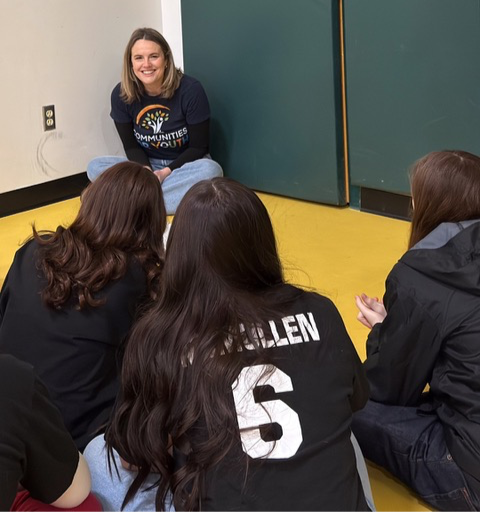
We learned that the parents in that school community weren't actually nice to each other, which was then spilling over onto how kids treated each other – and the whole community at large.
So that community worked together to do kindness activities every month. They had food, they had activities, and they worked hard to change the culture of how they talked to and treated one another.
“Here in Boise, we’ve consistently heard that kids need more spaces where they can hang out and feel like they belong. So we've been helping businesses look at how to become a youth-friendly business.”
We know that transportation for youth in Boise is a big issue – because they need to be able to independently get to youth-friendly spaces or activities. And there also need to be more youth-friendly spaces and activities. So that’s led to collaborations with Central District Health, Valley Regional Transit (VRT), the City of Boise and many others on a few exciting initiatives.

Get Out There A website dedicated to sharing teen friendly spaces and upcoming events for Treasure Valley youth.

Youth Ride Free This summer (May 1 - August 31), kids 18 and under can get a bus pass to ride the bus) for FREE. Learn more by attending an upcoming virtual information session.
Additional resources to learn more:
Communities for Youth Well-Being Survey: Learn more about the survey goals, questions, and findings – and the benefits to schools who choose to participate.
Communities for Youth: How to build more social connection
City of Boise Youth Roadmap: A detailed outline of the city’s research findings and plans for making Boise an even better place for youth to grow up.
John Gottman: Talking with Your Teen: 10 Tips for Meaningful Connection
Ask Lisa Podcast: Raising kids can be stressful, uncertain, and full of bumps. Psychologist and parent Dr. Lisa Damour’s podcast, cohosted by journalist and parent Reena Ninan, offers calm, practical guidance for parents.


Comments